
For generations, learning cursive was a rite of passage in schools. From ornate loops to perfectly connected letters, cursive handwriting symbolized both education and elegance. But in recent years, the prominence of cursive in school curriculums has dramatically declined.
So, when did schools stop teaching cursive, and do they still? Let’s explore the history, current status, and future of this once-essential skill.

A Brief History of Cursive Writing
Cursive writing has deep historical roots, dating back to ancient civilizations. The term “cursive” comes from the Latin word currere, meaning “to run,” reflecting the flowing nature of this writing style. Early forms of cursive appeared in Roman and medieval manuscripts, designed to make writing faster and more efficient with fewer pen lifts.
During the 19th and early 20th centuries, cursive became a hallmark of education, with methods like the Spencerian script and Palmer Method setting the standard for neat, elegant handwriting. Mastery of cursive was seen as essential not only for communication but also as a reflection of discipline and refinement.
The Decline of Cursive in Schools
The shift away from cursive began in the late 20th century, accelerated by the rise of technology. As computers and keyboards became ubiquitous, schools started prioritizing typing skills over penmanship. By the early 2000s, many schools had significantly reduced or eliminated cursive instruction altogether.
In the United States, the introduction of the Common Core State Standards in 2010 further marginalized cursive. These standards emphasized keyboarding and digital literacy over traditional handwriting, and cursive was not included as a requirement. As a result, many states and school districts phased it out of their curriculums.
Florida’s Response: Reintroducing Cursive
In 2014, Florida took steps to reintroduce cursive into elementary school curriculums. The Florida Department of Education added cursive handwriting requirements for students in grades 3 through 5.
Under these guidelines, third graders are introduced to cursive, and by fifth grade, students are expected to be proficient in reading and writing cursive. The goal is to balance the historical and practical importance of cursive with the state’s emphasis on preparing students for a technology-driven world.
While cursive is included in Florida’s curriculum, the extent of its teaching varies between districts. Teachers often face time constraints due to the need to cover standardized testing material, and cursive may be taught inconsistently. Additionally, with Florida’s focus on digital literacy and STEM initiatives, cursive sometimes takes a backseat to other priorities.
*As the parent of a 4th grader I can tell you that my son has learned zero cursive and still asks why I’m “writing in a foreign language” when he sees it. I’ve asked his teacher, and she said they just haven’t had time to introduce it yet.
Outside the U.S., cursive remains part of the curriculum in countries like France and Italy, where it is still regarded as an important skill. However, even in these countries, the emphasis on cursive is waning as technology becomes increasingly central to education.
The Case for Cursive
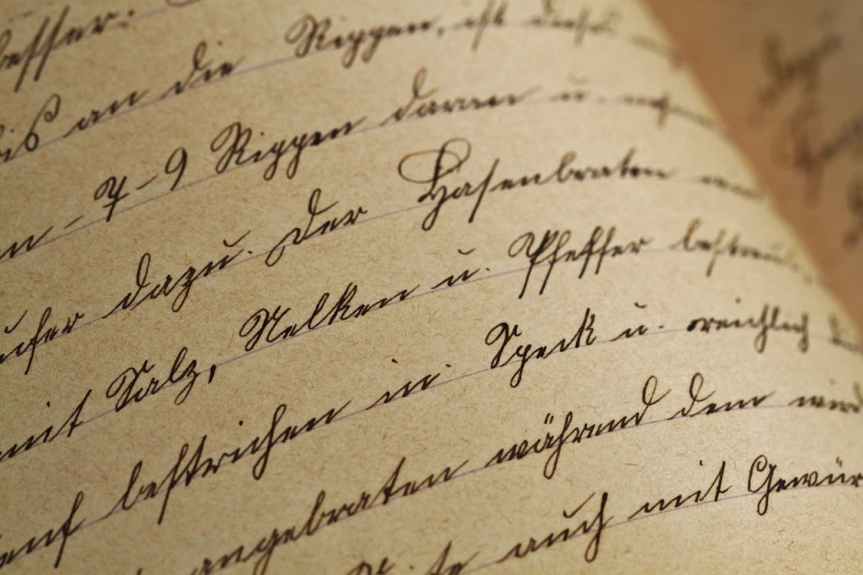
Advocates for cursive argue that it offers more than just a way to write. Research suggests that learning cursive improves fine motor skills, hand-eye coordination, and even cognitive development. Cursive also plays a role in cultural literacy, enabling students to read historical documents like the Declaration of Independence in their original form.
Moreover, cursive can be a creative outlet and a personal form of expression. In an age of uniform digital fonts, handwritten cursive offers individuality and a connection to the past.
The Future of Cursive
While cursive may never regain its former prominence, it’s unlikely to disappear entirely. As a skill, it continues to hold value for those who appreciate its aesthetic and historical significance. Efforts to preserve cursive, whether through schools, extracurricular activities, or personal interest, ensure that it remains part of our cultural heritage.
And personally, I find it easier to write in cursive than printing every letter. My cursive print is way better than my printing!
Discover more from the6parkers
Subscribe to get the latest posts sent to your email.


 the6parkers
Thanks for this informative post, Emily. I remember a school report card that said my handwriting needed improvement, so I practiced to the point where I had lovely, legible cursive handwriting. Many years later … enter computers and keyboards. I so seldom write anything anymore besides occasionally signing my name that my handwriting has become deplorable at best. I don’t know if it’s a necessary skill, but I’m certainly sad that I lost it.
LikeLiked by 1 person
Thank you! Emily has a couple guest writers now. You can see the author at the bottom of the post. (this one was me) I too had trouble with cursive in school! I practiced and practiced and even took calligraphy classes. It’s still my preferred way to write today. Well, cursive, not calligraphy, lol.
LikeLiked by 1 person
I remember in the early years of elementary school, every quarter, I would get all A’s except for a C in handwriting, lol. It hasn’t improved in any form. This is why I prefer to type. 😆
LikeLiked by 2 people
OMG same exact scenario for me! All A’s and then a C in handwriting. I would get so frustrated!
LikeLike